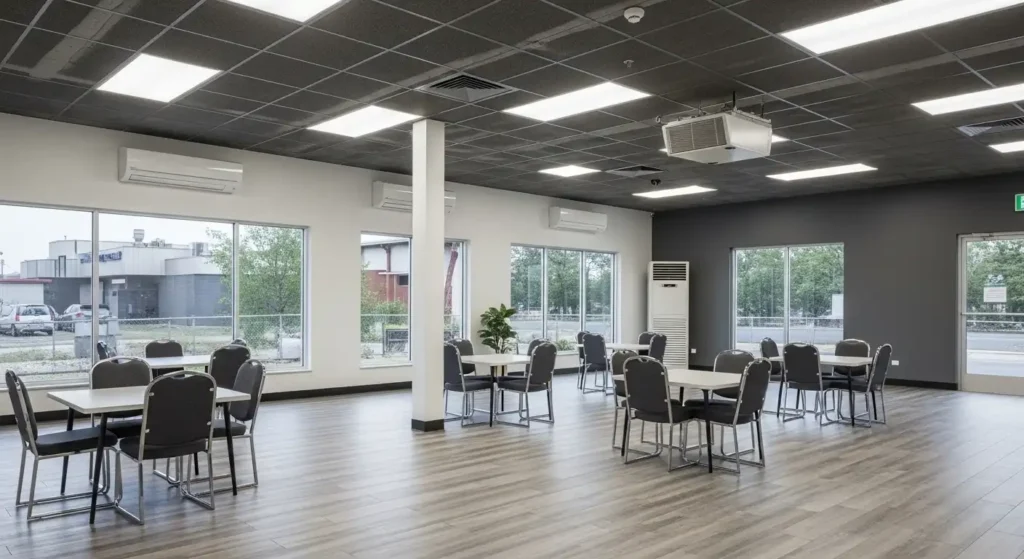
Businesses depend on reliable climate control to maintain consistent indoor conditions. Offices, service facilities, and retail stores with outdated or improperly-sized cooling systems may experience fluctuating temperatures; this places additional strain on building equipment. Here is more information on selecting the right air conditioning installation for your business:
Cooling Requirements in Commercial Spaces
Commercial buildings may have different cooling requirements than residential properties. Indoor temperatures during business hours sometimes increase due to various factors; this includes heat generated by lighting systems and appliances, higher occupancy levels, and larger floor areas. Air conditioning installation planning starts with an evaluation of the building’s usage patterns and layout since these factors affect how a cooling system performs.
Technicians help business owners determine which system is ideal for their building by examining factors such as ceiling height, ventilation pathways, and insulation. They use these details to identify the type of cooling system that will distribute air evenly throughout the entire space. The system can maintain stable indoor temperatures and operate within its intended performance range because the equipment is sized according to the building’s characteristics.
Contractors also inspect your current system to determine whether repairs are able to remedy the situation or if it would be more practical to install a replacement system. They examine components such as refrigerant lines, compressors, and electrical connections; these help them identify mechanical issues affecting the system’s operation. Installing a new system provides a long-term solution for buildings with outdated cooling systems that can’t maintain consistent indoor temperatures.
Commercial Air Conditioning Systems
Businesses can choose from different types of air conditioning systems depending on the layout of interior spaces and the building’s structure. System configuration dictates how air within the property is cooled, distributed, and circulated. Contractors evaluate ductwork placement, space availability, and structural design before recommending installation options. Some cooling systems may include the following:
- Central air conditioning systems that evenly distribute cooled air through ductwork connected to an outdoor condenser.
- Split systems that separate indoor air-handling components from outdoor condensing units.
Installations are also influenced by equipment design. Smaller systems may be integrated within interior mechanical spaces, and larger systems require reinforced mounting areas. Each configuration will move conditioned air throughout the property while maintaining balanced airflow between zones or rooms.
Plangud – Features, Benefits, and Applications
Operational Demands in Commercial Buildings
Air conditioning systems in businesses need to handle varying cooling requirements that are dictated by various factors, and these include outdoor temperatures, equipment operation, and customer traffic. The air conditioning system may overload and fail to reach the desired indoor temperature if it does not meet the infrastructure’s operational demands. Proper system sizing addresses these conditions by aligning cooling output with the operational requirements of the space.
Contractors determine equipment capacity by reviewing building usage patterns since businesses, such as retail stores, restaurants, and office environments, require different heat loads. They evaluate how much cooling output the air conditioning unit should provide during peak hours. System capacity also affects air circulation throughout the commercial building. Cooled air moves through vents at a consistent rate when the equipment matches operational demand. Occupied areas benefit from balanced temperatures throughout the day.
Professional Services for Businesses
Professional contractors provide air conditioning installation services for businesses in need of reliable cooling systems. These services include system evaluation, installation planning, and equipment setup based on the building’s cooling requirements. They are also able to handle unexpected breakdowns and replace outdated systems.
Contractors will inspect electrical connections and evaluate system compatibility with existing ductwork. These inspections help determine how the new air conditioner integrates with the building’s current system. Each solution is tailored to your specific needs, making sure your system has improved energy efficiency, lasting performance, and year-round comfort. Professionals also calibrate commercial HVAC systems after installation is complete to verify thermostat communication and test airflow levels.
Schedule Air Conditioning Installation Services
Commercial cooling systems help maintain a comfortable indoor environment for employees and customers. Hiring professional contractors and selecting the proper system helps businesses install cooling equipment that aligns with the layout and operational needs of their establishment. Some contractors recommend having your system checked twice a year by professionals; this helps make sure your system continues working as seasons change. Schedule air conditioning installation services to support reliable climate control for your business.